


A 1 kg Gain Can Add Several kg of Load to the Knee — Dr. Moriwaki on Why Weight Management for Knee Osteoarthritis and Stem Cell Conditioned Media Injection Should Be Advanced Together2026.07.22
“I was told my knee pain is because of my weight.” “Can I avoid surgery if I lose weight?” — we are frequently asked these questions by patients with knee osteoarthritis. Weight management for knee osteoarthritis is a medically important factor that significantly influences disease progression and treatment outcomes. At the same time, a knee that already has strong pain and inflammation faces the very real dilemma that losing weight itself is difficult. In this article, Dr. Moriwaki organizes the medical rationale for the mechanical load on the knee joint and the meaning of advancing stem cell conditioned media knee joint injection in parallel with weight loss.
Key Points of This Article
・Biomechanical studies show that the knee bears 2–3 times body weight during walking and 4–5 times during stair climbing
・Losing 5–10% of body weight can meaningfully improve pain and function scores in knee osteoarthritis
・Weight management for knee osteoarthritis reduces “mechanical load,” but the inflammatory environment inside the joint is not easily changed by weight loss alone
・Stem cell conditioned media knee joint injection is thought to act on the synovitic environment through growth factors and anti-inflammatory cytokines
・Weight loss and regenerative medicine are complementary, not competitive; designing both together is a realistic approach
Medical Basis for the Load Weight Places on the Knee
Ground Reaction Force at the Knee During Walking
Biomechanical measurements have shown that merely walking on level ground places a ground reaction force of roughly 2–3 times body weight on the knee joint. For a person weighing 70 kg, this means 140–210 kg of force is transmitted to the knee joint surface with every step. This load is dispersed by the cartilage between the femur and tibia and by the menisci. However, once the cartilage has worn down in knee osteoarthritis, this shock-absorbing mechanism no longer functions well, and the load reaches deeper layers closer to bone.
Even Greater Load During Stair Climbing and Squatting
During stair climbing, the load on the knee joint is reported to rise to 3–4 times body weight, and during deep flexion such as squatting or near-seiza posture, up to 5–7 times. The reason weight management for knee osteoarthritis is emphasized is that these repeated everyday loads scale with body weight. A single 1 kg gain can add several kg of extra load depending on the activity. For information on joint disease, please refer to the resources of the Japanese Orthopaedic Association.
The Effect and Limits of Weight Loss for Knee Osteoarthritis
A 5% Weight Loss Can Improve Pain Scores
Multiple clinical studies have reported that patients with knee osteoarthritis who are overweight or obese can meaningfully improve pain scores and walking function by losing 5–10% of body weight. Beyond reducing mechanical load, decreases in inflammatory cytokines produced by adipose tissue (TNF-α, IL-6, leptin, etc.) are also thought to contribute to a better intra-articular environment. Weight management for knee osteoarthritis is not simply about “becoming lighter”; it also has a dimension of gently calming systemic inflammation.
An Inflammatory Environment That Weight Loss Alone Cannot Reach in Time
On the other hand, weight loss takes months, and during that time synovitis and cartilage matrix degradation can continue inside the joint. Patients already suffering from strong pain and limited range of motion often struggle to carry out exercise or dietary management in the first place, and the resulting drop in activity leads to further muscle weakening — a vicious cycle. If the inflammatory cycle inside the joint is not calmed during this period, the knee may deteriorate further before the benefits of weight loss can appear.
Why Weight Management for Knee Osteoarthritis and Stem Cell Conditioned Media Knee Joint Injection Are Advanced Together
Reduce Mechanical Load, and Also Shape the Biological Environment
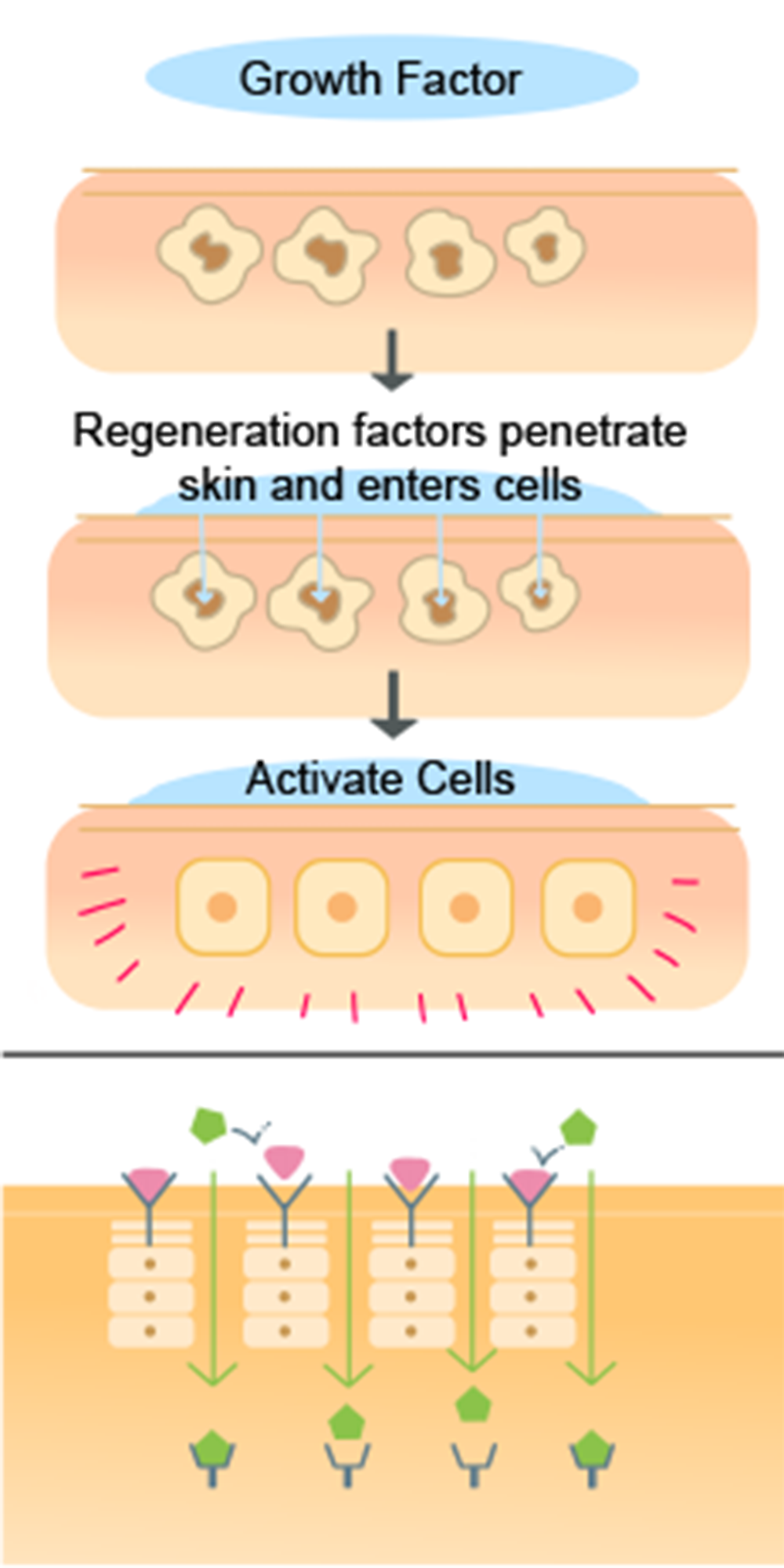
While weight management for knee osteoarthritis is an approach that reduces “mechanical load,” stem cell conditioned media knee joint injection is an approach that acts on the “biological environment” within the joint. Growth factors contained in the conditioned media such as TGF-β, IGF-1, and HGF, along with anti-inflammatory cytokines, are thought to be involved in suppressing synovitis and preparing an environment conducive to tissue repair. The two are not competitors but complementary approaches acting on different layers. Please also see our page on stem cell conditioned media joint injection for details.
A Realistic Design for Patients Who Struggle to Lose Weight
For those trapped in the loop of “too painful to walk, so can’t exercise, so can’t move, so gain weight,” it is often realistic to first control inflammation and pain to some degree with stem cell conditioned media knee joint injection, and then take on weight loss once walking and light exercise become possible. Of course, individual differences exist: pain improvement and pace of weight loss vary greatly by case, so treatment plans need to be flexibly adjusted as we follow progress.
Treatment Design and the Boundaries of Indication
Body Composition and Joint Status to Confirm at the First Visit
At the first visit we confirm not only height, weight, and BMI, but where possible body composition such as muscle mass and body fat percentage, as well as the degree of joint destruction on X-ray and MRI. When the disease has progressed to KL grade III–IV with near-loss of joint space, the effect achievable with stem cell conditioned media knee joint injection tends to be limited, and consulting an orthopedic surgeon about the indication for total knee arthroplasty may take priority.
Combining Pace of Weight Loss with Rehabilitation and Injection
A gradual pace of about 1–2 kg per month is considered safe for weight loss. Rapid weight loss risks muscle loss (sarcopenia), which in turn weakens the muscles supporting the knee. Weight management for knee osteoarthritis is basically designed alongside quadriceps strengthening, low-impact exercise such as aqua aerobics, and nutritional guidance. Stem cell conditioned media knee joint injection can effectively serve as support for the “introduction phase” of this process. Effects vary between individuals and are not guaranteed for every patient — we always convey this honestly.
Frequently Asked Questions
Q. If I can lose weight, is stem cell conditioned media knee joint injection unnecessary?
If weight loss alone brings sufficient pain relief, there is no need to rush into injection. However, when synovitis is already strong and the inflammatory cycle is turning, or when pain itself makes exercise impossible, advancing both together may make weight loss more feasible. Individual judgment is required.
Q. How much weight loss can be expected to bring benefit?
Clinical studies report symptomatic improvement with a 5–10% loss of body weight, but this is only an average trend and individual variation exists. For a 70 kg person, this is a rough guide of 3.5–7 kg. Rather than unreasonable short-term reduction, a gentle 1–2 kg per month is recommended.
Q. I have already been advised to consider a joint replacement — can conditioned media injection postpone it?
In end-stage knee osteoarthritis progressed to around KL grade IV, the effect achievable with stem cell conditioned media knee joint injection tends to be limited, and evaluating the appropriateness of total knee arthroplasty with an orthopedic surgeon takes priority. This is not a treatment that absolutely guarantees avoidance of surgery.
Q. When is a good timing to receive a knee joint injection while losing weight?
There is no single “correct timing.” One approach is to prepare the environment with an injection during periods of stronger pain and inflammation, and then take on more serious exercise and weight loss once symptoms settle. We recommend deciding together with your physician based on your individual life situation and joint status.
──────────────
Supervising Physician: Shin Moriwaki, MD
Member, Japan Society of Aesthetic Surgery (JSAS) / Member, American Academy of Aesthetic Medicine
ECFMG Certificate (US Medical License Qualification)
──────────────
📍AVAN TOKYO Ginza Regenerative Medicine
English / 中文 / Tiếng Việt supported.
Inquiries via DM / LINE / Website / Phone.