


Which Joint Pain Responds to Stem Cell Joint Injection? Dr. Moriwaki Clarifies the Right Fit and the Limits Across Osteoarthritis, Enthesopathy, and Post-Surgical Inflammation2026.07.16
“My knee or shoulder pain has become chronic and hyaluronic acid or steroid injections no longer feel sufficient” — “I want to avoid surgery, but what is the next option?” More and more patients arrive with these questions and start looking into stem cell joint injection using culture supernatant. Yet this therapy is not universally applicable: some kinds of joint pain respond well, others do not. At AVAN TOKYO Ginza, we frame indication case by case — osteoarthritis, enthesopathy of tendons, post-surgical inflammation control — because the mechanism of the pain determines whether the therapy is likely to help. In this article, our supervising physician Dr. Moriwaki organizes which kinds of joint pain are candidates for stem cell joint injection, and where it falls short.
Key Points of This Article
– Stem cell joint injection acts on both the inflammatory cycle and the tissue-repair environment, so its fit depends on how the pain arises
– Early-to-mid stage osteoarthritis, chronic enthesopathy, and post-surgical inflammation are common candidate settings
– Advanced joint destruction, active infection, and nerve-origin pain are difficult to address with stem cell culture supernatant alone
– Diagnosis (history, exam, imaging) is essential; the injection is meaningful only in combination with proper workup
– Do not decide on cost or session count alone — assume ongoing follow-up and combined exercise therapy
Why Some Joint Pain Responds and Some Does Not
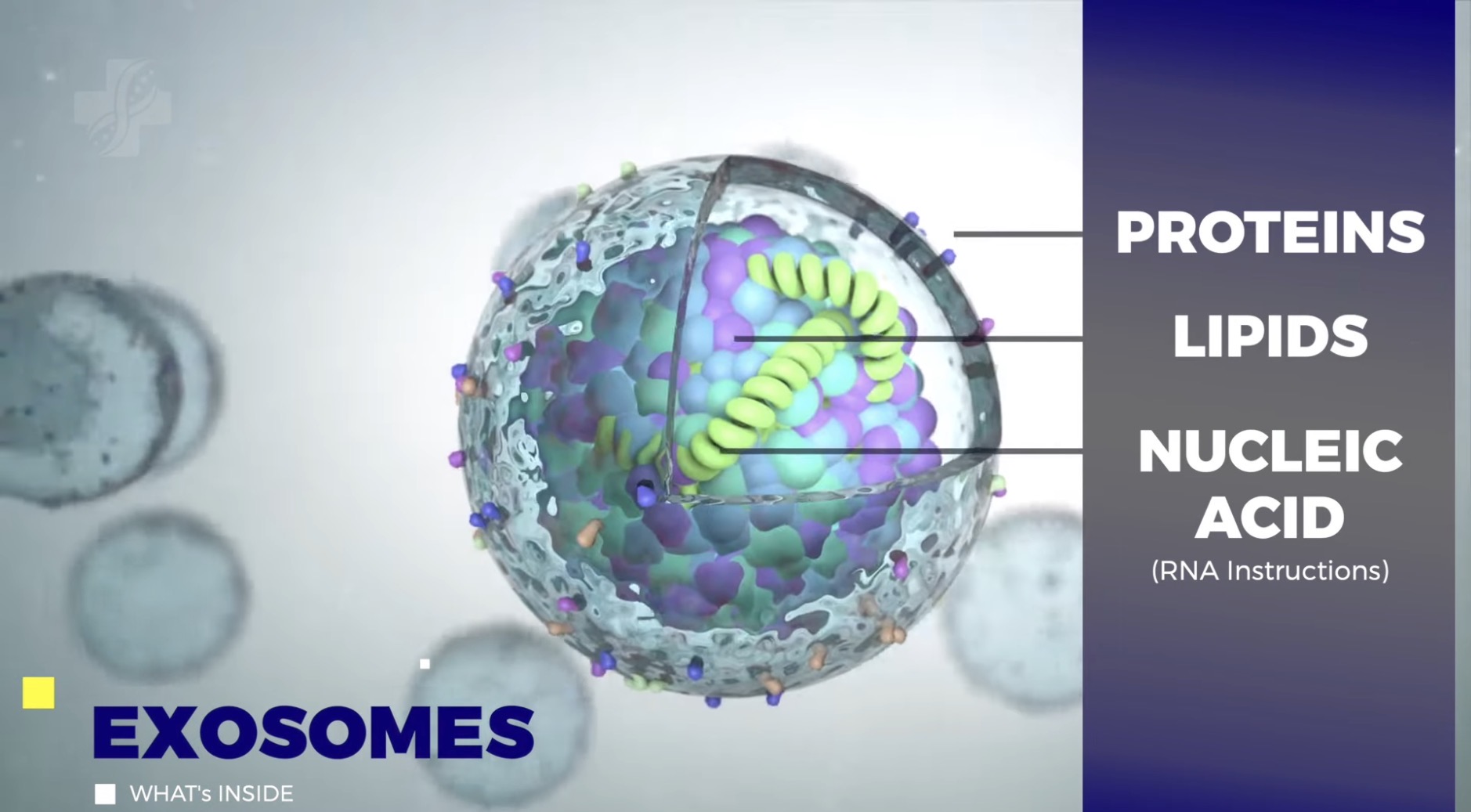
Stem cell culture supernatant contains cytokines, growth factors, and exosomes secreted by stem cells. Basic research reports action in both an anti-inflammatory direction and one that supports the tissue-repair environment. When we speak of an injection into a joint, the aim is not simply pain relief — the target is intervention into the local inflammatory cycle and the repair environment of injured tissue. Proteins such as TGF-β, IGF-1, and FGF, along with miRNA carried by exosomes, are thought to modulate the local cellular environment.
For this reason, pain rooted in inflammation or in salvageable tissue damage may respond, whereas pain from nerve entrapment, complete structural breakdown of the joint, or active infection is unlikely to respond to injection alone. Clarifying “where and why it hurts” is the starting point of the indication decision.
Type ①: Chronic Pain in Osteoarthritis
Osteoarthritis of the knee, hip, and fingers is the most common context in which stem cell joint injection is considered. Pain in OA does not come from cartilage loss alone — synovitis, joint effusion, and subchondral bone remodeling all contribute. When the injection acts to dampen the synovitis cycle, symptom reduction and functional gains have been described at the level of case reports and observational studies.
However, in end-stage KL grade IV destruction, cartilage does not “regenerate.” The injection is at best a supportive intervention aimed at calming the intra-articular inflammatory environment and lightening the burden on daily life. Individual response varies widely, and we share upfront that this is not a therapy whose effect can be guaranteed.
Type ②: Chronic Pain from Tendon Enthesis or Ligament Injury
Tennis elbow, golfer’s elbow, Achilles tendinopathy, plantar fasciitis, patellar tendinopathy — chronic pain arising at the tendon enthesis is also a candidate for periarticular injection. These conditions are now understood less as “-itis” than as tendinosis: tissue with poor vascular supply and slow healing.
Injection with culture supernatant is one conservative option aimed at improving the local repair environment. That said, rest, eccentric exercise, and activity modification remain the foundation — injection alone does not complete the treatment.
Type ③: Post-Surgical or Post-Athletic Inflammation That Lingers
After partial meniscectomy of the knee, rotator cuff repair of the shoulder, or ankle sprain, inflammation can persist even when tissue is largely healed. In these cases the local inflammatory environment often becomes the trigger of residual pain and loss of function. Using the injection as an adjunct alongside rehabilitation — “damping pain while allowing motion” — is a realistic use that may contribute to smoother functional recovery.
Situations Where the Injection Is Not a Fit
On the other hand, we also state plainly which situations call for caution or are outright non-indications:
– Active infection or febrile joint arthritis (treat infection first)
– End-stage osteoarthritis with high structural breakdown (consider joint replacement first)
– Nerve-origin lower-limb pain such as sciatica or spinal canal stenosis (nerve block first)
– Pain from bone lesions or tumors (address the underlying disease)
– Poorly controlled systemic disease or immunosuppression
For information on joint disorders, please also refer to the guidelines of the Japanese Orthopaedic Association, and combine specialist orthopedic evaluation with the decision.
How to Think About Effect Judgment and Session Design
The therapy is not a “one-shot” fix. A two-phase design — closer intervals during induction while checking response, wider intervals during maintenance — is common. Effect is judged objectively across pain scores (VAS/NRS), range of motion, and quality of daily activities. If several months pass without improvement, we shift toward modification, discontinuation, or renewed orthopedic evaluation rather than pushing on.
What to Confirm With Your Physician Before Stem Cell Joint Injection
At the first visit, we recommend confirming the following together:
– Correspondence between imaging (X-ray, MRI, ultrasound) and clinical findings
– The likely responsible tissue inferred from “when and with what movement it hurts”
– Prior response to hyaluronic acid or steroid injections
– Whether exercise therapy, orthoses, and daily habit changes can run in parallel
– The timing of effect judgment and the next step if response is weak
More details on stem cell joint injection at our clinic are also available on our dedicated page.
Frequently Asked Questions
Q. Will one session be enough?
Response varies widely by individual. Some patients feel improvement after one injection; others need several sessions across months to evaluate. Splitting an induction phase and a maintenance phase in the plan is realistic.
Q. Can it be done for end-stage knee osteoarthritis?
Expected benefits are limited when structural destruction is advanced. In such cases, joint replacement and other orthopedic options take priority. Please understand this as a supportive positioning.
Q. Does it work for nerve pain such as sciatica?
Nerve-origin pain is difficult to address with this therapy alone. The first priority is to evaluate the underlying pathology and consider nerve blocks or conservative therapy.
Q. What about exercise and rehabilitation?
This is not an “injection alone” therapy. Pairing it with exercise, orthoses, and daily habit adjustment gives the best chance of functional gain.
Q. How many sessions are needed?
It depends on the joint and severity. Typically, closer spacing during induction and wider spacing during maintenance. If response is weak, we shift toward modification, discontinuation, or renewed orthopedic assessment.
──────────────
Supervising Physician: Shin Moriwaki, MD
Member, Japan Society of Aesthetic Surgery (JSAS)
Member, American Academy of Aesthetic Medicine
ECFMG certificate (US medical licensing)
──────────────
📍AVAN TOKYO 銀座 再生医療
AVAN TOKYO Ginza Regenerative Medicine
English / 中文 / Tiếng Việt 対応可能
ご相談は DM / LINE / Website / Phone より承っております。