


What IGF-1 and HGF Actually Do in the Hair Follicle — Anagen-Prolonging Signals from Bench to Clinic2026.06.30
In hair loss treatment, growth factors are often discussed in shorthand: “VEGF for blood flow,” “FGF for proliferation.” Yet IGF-1 (insulin-like growth factor 1) and HGF (hepatocyte growth factor) operate one layer deeper — they govern the time axis of the follicle, namely how long the anagen (growth) phase can be sustained. Any meaningful discussion of hair regenerative medicine using stem cell conditioned media has to engage these two factors. In this column, we explain at a bench-research level what IGF-1 and HGF actually do inside the hair follicle, and we organize how far the human clinical evidence has come.
The True Lead of the Hair Cycle is “Anagen Length” — Why IGF-1 and HGF Hold the Key
Hair does not grow continuously and at random. Each follicle cycles through anagen (growth), catagen (regression), and telogen (rest). In a healthy scalp, anagen lasts roughly 2 to 6 years, but in AGA (androgenetic alopecia) and FAGA, anagen is known to shorten from a scale of years to a scale of months. In other words, the essential variable governing hair density is not “how many hairs fall out” but “how long anagen can be maintained.”
What an Anagen-Prolonging Signal Means
The anagen phase of a follicle is sustained by molecular signals released from dermal papilla cells (DPCs) toward surrounding matrix cells and follicular stem cells. Among these, IGF-1 and HGF, once secreted by DPCs, bind to receptors on epithelial follicular cells (IGF-1R, c-Met) and activate proliferation- and survival-supporting pathways (PI3K-AKT, MAPK). These pathways suppress apoptosis (cell death) and drive matrix cell division, biasing the system toward a longer anagen. Stem cell conditioned media is meaningful precisely because it delivers these signals together.
What Happens in AGA
In AGA, dihydrotestosterone (DHT) binds androgen receptors on dermal papilla cells, increasing anagen-terminating signals such as TGF-β, while the secretion of anagen-prolonging signals like IGF-1 and HGF relatively declines — a pattern repeatedly shown in cultured dermal papilla studies. The follicle is in a state where the “accelerator toward shrinkage” and the “brake on extension” fire simultaneously, and the room to intervene here is exactly where stem cell conditioned media as regenerative medicine enters the picture.
Unpacking the Mechanism of IGF-1 and HGF
The two factors push in similar directions, but their roles inside the follicle differ subtly.
IGF-1 — Driver of Matrix Cell Survival and Hair Shaft Formation
IGF-1 is secreted not only from dermal papilla cells but also from outer root sheath cells, suppressing apoptosis in matrix cells and supporting the formation of the hair shaft itself. In organ-culture systems of human follicles, addition of IGF-1 lengthens follicle growth, and blocking IGF-1 signaling causes early transition into catagen. Systemically, in patients with short stature whose IGF-1 is low, hair shaft diameter also tends to be thinner — so IGF-1 attracts attention as a factor correlated with the “thickness” of hair.
HGF — Sustaining Crosstalk Between Follicle, Vasculature, and Nerves
HGF is secreted from dermal papilla and surrounding mesenchymal cells and acts not only on epithelial matrix cells but also on perifollicular vascular endothelium and nerves. Via c-Met, it promotes angiogenesis, neural regeneration, and epithelial migration — effectively rebuilding the follicle’s environment as a whole. In murine follicle studies, local administration of HGF has been shown to induce telogen follicles into anagen, positioning HGF upstream of the hair cycle switch.
The Two Factors “Cooperate,” They Don’t Simply “Add Up”
What is critical in the basic research is that delivering IGF-1 and HGF together within a conditioned medium tends to produce more stable anagen-prolonging effects than delivering either factor alone. This suggests the follicle as an organ is maintained not by a single factor but by a combination of many signals. This is one of the largest reasons stem cell conditioned media is differentiated from single-growth-factor preparations.
Where Does Human Clinical Evidence Stand Today?
The above is bench science. How far has clinical evidence actually progressed?
Single Purified Factors Face Many Walls in Delivery
Clinical trials applying recombinant IGF-1 or HGF alone, topically or by injection into the scalp, are limited, small in scale, and long-term efficacy remains unclear. One reason is that these proteins are large and struggle to cross the skin barrier; another is that they are rapidly degraded in vivo. For the formal AGA treatment framework, please refer to the guidelines of the Japanese Dermatological Association; as of today, single-agent IGF-1 or HGF preparations are not formally positioned as AGA therapies.
Stem Cell Conditioned Media as a Delivery Strategy
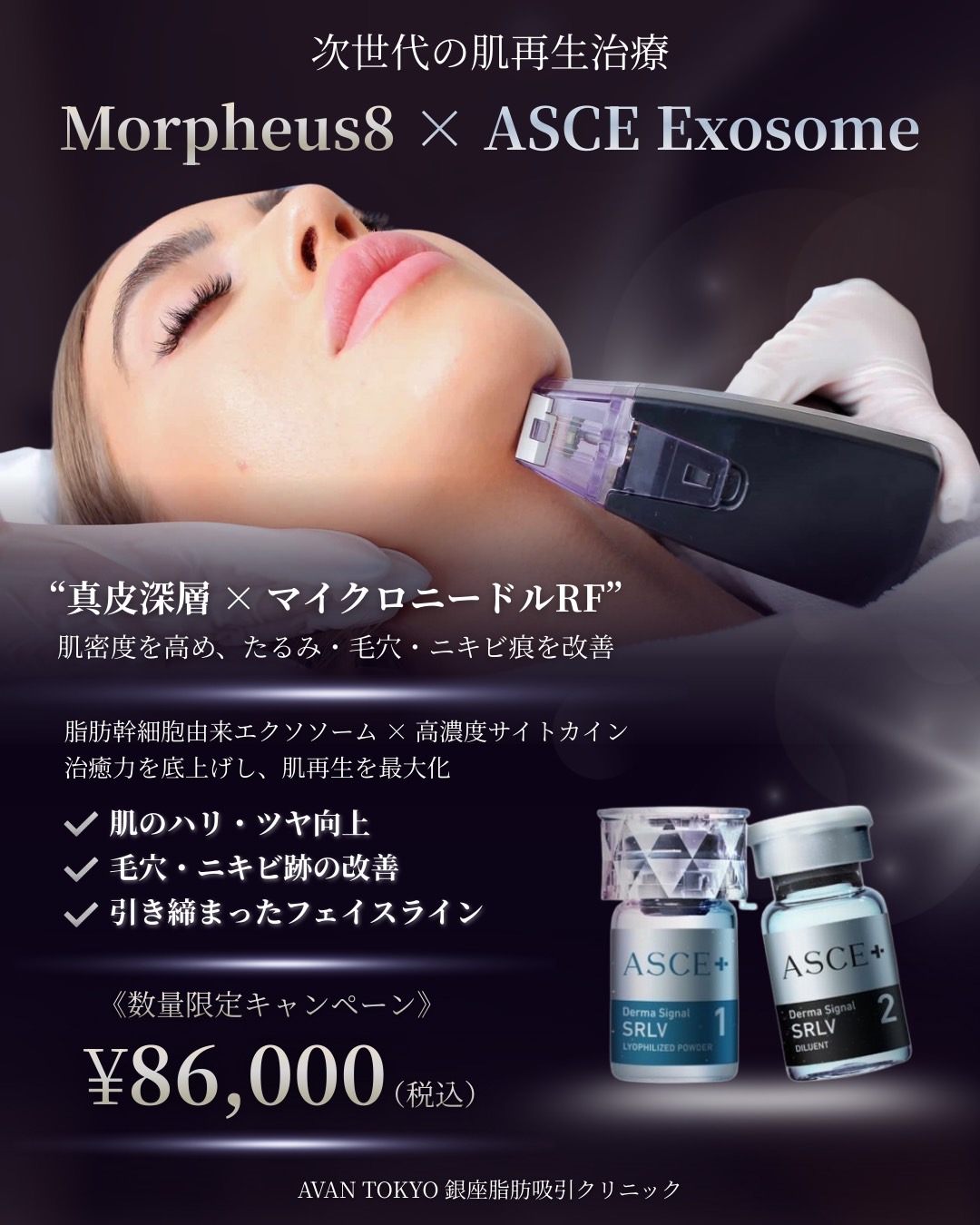
The realistic alternative is to deliver IGF-1 and HGF together with exosomes and other growth factors as part of the conditioned medium that mesenchymal stem cells naturally produce. At AVAN TOKYO Ginza, we combine Morpheus8 microchannel formation with drug delivery of stem cell conditioned media to reach close to the level of the dermal papilla. This approach is closer to reconstructing the signaling environment the follicle naturally receives, rather than trying to push isolated IGF-1 or HGF into it.
Manage Expectations — “Anagen Prolongation” Is Not a Cure-All
That said, even stem cell conditioned media rich in IGF-1 and HGF may not produce sufficient response in regions where the follicle has fully scarred out, or in late-stage AGA so advanced that donor dominance is lost. Regenerative medicine should be understood not as “creating follicles from zero” but as “prolonging anagen in follicles that still retain function and reversing miniaturization back toward thicker hair.” Designs that combine antiandrogen therapy such as finasteride or dutasteride with stem cell conditioned media work in practice because the roles divide cleanly: drugs that release the brake, and regenerative medicine that presses the accelerator. For more on treatment design and other hair growth topics, please see our related columns on hair regenerative medicine.
Conclusion
IGF-1 and HGF are core signals that prolong anagen and support matrix cell survival in the hair follicle. In AGA they decline in relative terms, and antiandrogen therapy alone cannot adequately cover the “growth-promoting side.” Stem cell conditioned media is regenerative medicine aimed at rebuilding anagen-prolonging signals by delivering IGF-1, HGF, other growth factors, and exosomes together to the follicle. Precisely because it is not a panacea, diagnosis, progression staging, and combination-therapy design matter. Drawing on both basic research and clinical reality, we recommend taking a moment to organize what your own follicles are actually missing.
──────────────
[Supervising Physician] Shin Moriwaki (Supervising Doctor)
Member, Japan Society of Aesthetic Surgery (JSAS) / Member, American Academy of Aesthetic Medicine
ECFMG Certificate
──────────────
📍AVAN TOKYO Ginza Hair Regenerative Medicine
English / 中文 / Tiếng Việt available
Inquiries via DM / LINE / Website / Phone are welcome.