


“My heel hurts where the shoe rubs” — chronic pain at the back of the heel: don’t mistake insertional Achilles tendinopathy with Haglund deformity for simple paratenonitis or shoe-bite. Dr. Moriwaki maps the chain of inflammation and degeneration at the bone-tendon interface driven by the posterosuperior calcaneal prominence, and clarifies what stem cell conditioned media enthesis injections can address (the inflammatory milieu) versus what they cannot (the bone shape itself).2026.08.04
“A new pair of shoes and the back of my heel throbs again.” “It’s not just heels or loafers — even my regular sneakers rub the same spot until it hurts.” If chronic pain at the back of the heel has lasted more than a few months, it may not be simple shoe-bite or paratenonitis. The combination of insertional Achilles tendinopathy and Haglund deformity may sit behind it. When people think of Achilles pain, most picture the midsubstance variety a few centimeters up the calf. But insertional Achilles tendinopathy — the pain arising where the tendon anchors to the calcaneus — is a distinct orthopedic entity with a different peak age, different aggravating movements, and a different treatment response.
Key points of this article
・Insertional Achilles tendinopathy differs from midsubstance Achilles tendinopathy in pathology and treatment response — they must be handled as separate entities.
・Haglund deformity (the posterosuperior calcaneal prominence) acts as a chronic mechanical irritant to the enthesis, driving insertional inflammation and degeneration.
・Mislabeling the condition as shoe-bite, paratenonitis, or simple bursitis can leave patients on anti-inflammatories for years while the disease progresses.
・Stem cell conditioned media enthesis injection is positioned as one conservative option for the inflammatory and degenerative environment of insertional Achilles tendinopathy.
・Injections cannot reshape the bone prominence itself, so combining them with footwear, orthotics, and activity modification is a prerequisite for a coherent plan.
The pathology of insertional Achilles tendinopathy and Haglund deformity
The “midportion” and the “insertion” are two different worlds
The Achilles tendon is the body’s largest tendon, running from the triceps surae (gastrocnemius and soleus) to the posterior calcaneal tuberosity. Disorders here divide neatly into two by location. One is midsubstance Achilles tendinopathy — chronic intratendinous degeneration two to six centimeters proximal to the insertion, common in runners and jumping athletes. The other is the insertional form (insertional Achilles tendinopathy), which affects the tendon-bone interface itself and is more often seen in middle-aged adults, people who stand for long hours, and those who wear high heels regularly. The two are anatomic neighbors but respond differently to rehabilitation and to injections, so identifying which Achilles disorder you are treating is the starting point of any coherent plan.
How Haglund deformity irritates the enthesis
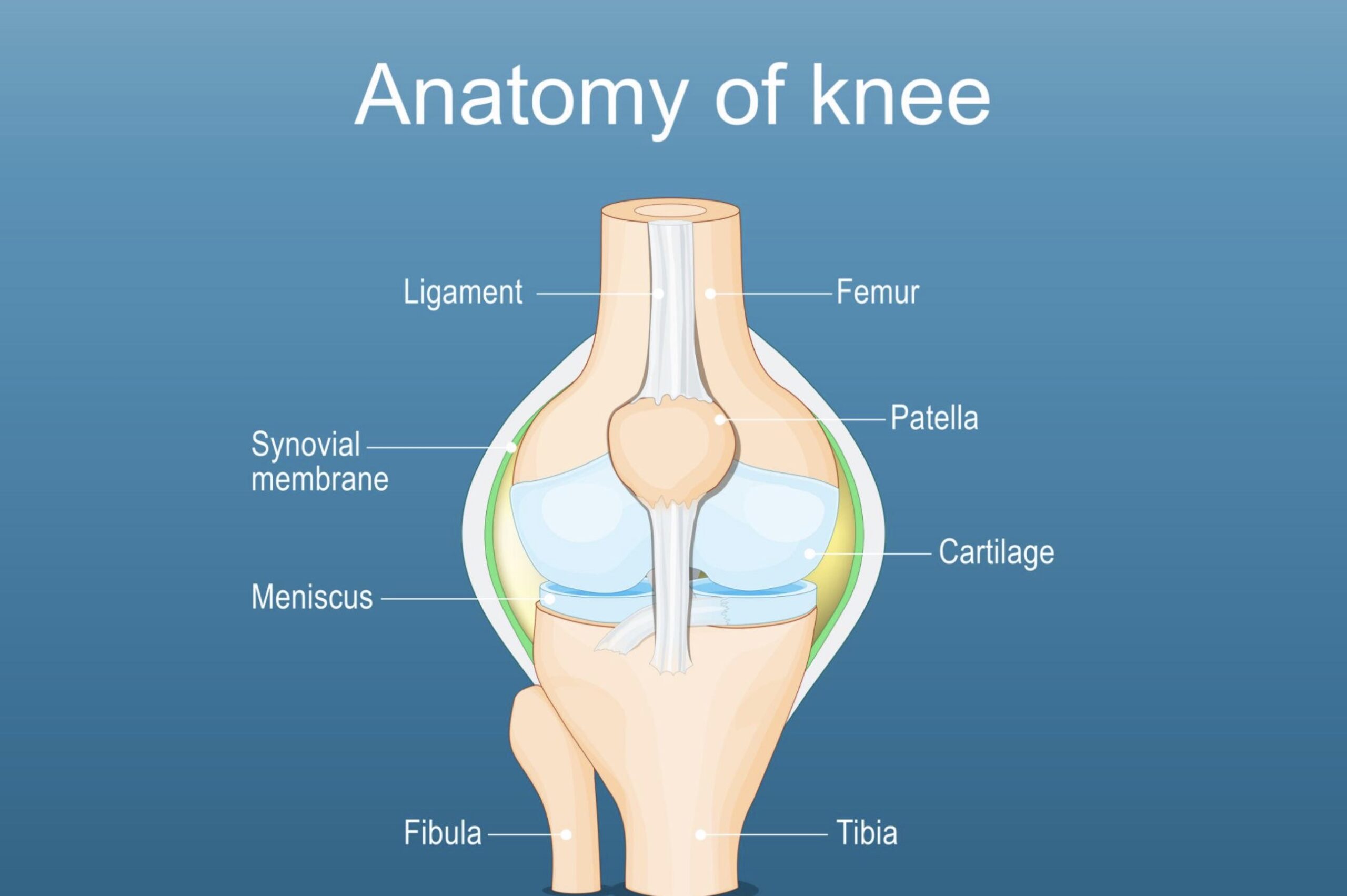
Haglund deformity is a prominence of the posterosuperior calcaneus. Some people are born with the shape; in others it becomes clinically obvious with age or sustained mechanical stress. The prominence alone is often asymptomatic. But when the tendon insertion and the retrocalcaneal bursa are chronically pinched between a rigid shoe heel counter and the bony prominence, a cascade builds: chronic retrocalcaneal bursitis, microtears at the enthesis, collagen fiber degeneration, calcifications within the insertion (insertional enthesophytes), and pain sensitization from local neovascularization and nerve terminal proliferation. In other words, Haglund deformity is one contributor; the actual pain generator is the chronic inflammatory and degenerative reaction at the enthesis. Without this framing, treatment tends to focus only on the bone and fails to line up with the biology. For orthopedic reference, see the Japanese Orthopaedic Association.
Differentiating from simple paratenonitis or shoe-bite
Symptoms track closely with footwear
Insertional Achilles tendinopathy is distinctive in how narrowly its pain is triggered. The pain sits at the posterosuperior calcaneus, at the tendon-heel junction, often slightly lateral of the midline. It flares with closed-back shoes, uphill walking, stair climbing, and the first few steps in the morning. Open-back sandals or shoes with a low, soft heel cup markedly ease symptoms — a classic pattern. Midsubstance Achilles tendinopathy, by contrast, hurts two to six centimeters above the insertion, is common in runners, and is far less footwear-dependent. Simple shoe-bite dermatitis stays superficial with redness, blisters, or erosions and does not carry a deep enthesis pain. Because the Achilles tendon has no true tendon sheath, the correct term for its peritendinous inflammation is paratenonitis, not tenosynovitis.
What to look for on imaging
A lateral heel radiograph shows the posterosuperior bony prominence (Haglund deformity) and any insertional enthesophytes. Bony prominence alone is seen in asymptomatic individuals, however, so the key is whether imaging matches the symptoms. Ultrasound and MRI reveal retrocalcaneal bursal distention, insertional tendon thickening with hypoechoic degenerative zones, and neovascularization. MRI in particular identifies calcaneal marrow edema and T2 hyperintensity as markers of chronicity.
What stem cell conditioned media enthesis injection can and cannot address
What it can address: the inflammatory cycle and repair environment
The enthesis is poorly vascularized, and once degeneration takes hold, spontaneous healing is limited. Stem cell conditioned media enthesis injection, through its cytokines, growth factors, and exosomes, is positioned as one conservative option: to modulate the chronic inflammatory cycle around the insertion, to help control synovial inflammation in the retrocalcaneal bursa, to prepare the microenvironment needed for tissue repair, angiogenesis, and fibroblast activation, and to sidestep the tendon-weakening risks associated with repeated local steroid injections. Delivering the injection under ultrasound guidance to the insertion and peribursal space improves accuracy and safety compared with blind puncture. See also our page on stem cell conditioned media joint and enthesis injection.
What it cannot address: the bony morphology itself
An honest caveat in planning care for insertional Achilles tendinopathy is that stem cell conditioned media enthesis injection does not shrink the bony prominence of Haglund deformity. As long as the mechanical irritant remains, the same shoes and the same movements can reignite the enthesis, no matter how well the inflammation is quieted. The injection therefore has to be paired with mechanical strategies: switching to shoes with softer heel counters or open-back styles; silicone heel lifts that raise the heel a few millimeters to reduce traction on the insertion and pressure on the prominence; calf stretching (with attention to the soleus in a knee-flexed position) and eccentric loading exercises adapted for the insertional pattern; and activity modification. When exhaustive conservative care still fails and daily life remains restricted, surgical options — Haglund exostectomy or reattachment reconstruction of the insertion — enter the discussion. The injection is best framed not as a guarantee of avoiding surgery but as one option for holding a conservative line for as long as possible.
Our sequence of examination and treatment planning
For patients with posterior heel pain suggestive of insertional Achilles tendinopathy, AVAN TOKYO Ginza follows a set sequence. The history captures the pain location, the aggravating movements, the shoes worn, and the mechanical load pattern of work and sport. Inspection and palpation assess the bony prominence, insertional tenderness and swelling, and skin findings (to distinguish from shoe-bite). A lateral radiograph and ultrasound then visualize the prominence, the enthesis, and the bursa. Treatment is layered by severity and lifestyle: for mild to moderate cases, footwear and insole adjustments plus stretching and eccentric loading come first; for chronic cases that still restrict daily life, stem cell conditioned media enthesis injection under ultrasound guidance is offered. For severe cases resistant to conservative care, referral to an orthopedic surgeon for evaluation of surgical options is arranged.
Frequently asked questions
Q. Can insertional and midsubstance Achilles tendinopathy be treated the same way?
No — they differ in peak age, pathology, and treatment response and should be handled as separate entities. Rehab differs in particular: for the insertional pattern, eccentric loading is often performed with the knee flexed to change the load vector. Stem cell conditioned media enthesis injection must also be delivered precisely to the insertion and around the retrocalcaneal bursa, so ultrasound guidance matters even more here.
Q. If Haglund deformity is diagnosed, is surgery always needed?
Many people with the bony shape live without symptoms. Surgery is indicated not by “a prominence exists” but by “pain still restricts daily life after exhaustive conservative care (footwear, orthotics, exercise, injections).” The rule is to progress through conservative options in a stepwise fashion first.
Q. How many stem cell conditioned media enthesis injections are needed before improvement?
Because the enthesis is poorly vascularized and repair is slow, this is not a single-shot treatment. A realistic plan usually splits into a loading phase of several injections and, once stabilized, a maintenance phase. Response varies with the severity of Haglund deformity, the extent of degeneration, and activity level. The standard approach is to reassess pain scores, range of motion, and daily function four to six weeks after the first injection and then decide whether to continue or adjust.
Q. How does this differ from steroid injection?
Local steroid injection is a strong anti-inflammatory, but direct injection into the Achilles enthesis carries known risks of tendon weakening and rupture, which limits repeat use. Stem cell conditioned media enthesis injection operates on a different axis — modulating the repair environment rather than simply suppressing inflammation — and is considered as an alternative or complement for patients who have hit the limits of repeated steroid use.
Q. Can changing shoes alone resolve it?
In mild, short-duration cases, reducing mechanical stress at the heel can be enough for natural recovery. But when the problem has lasted several months, structural changes at the enthesis — degeneration, neovascularization, nerve terminal proliferation — accumulate, and footwear alone often fails to resolve the pain. That is the stage at which combining conservative care with stem cell conditioned media enthesis injection begins to make sense.
──────────────
[Supervised by] Shin Moriwaki, MD
Member, Japanese Society of Aesthetic Surgery (JSAS) / Member, American Academy of Aesthetic Medicine
ECFMG Certificate (US Medical Licensure Qualification)
──────────────
📍AVAN TOKYO Ginza Regenerative Medicine
English / 中文 / Tiếng Việt available.
Inquiries welcome via DM / LINE / Website / Phone.